
Introduction
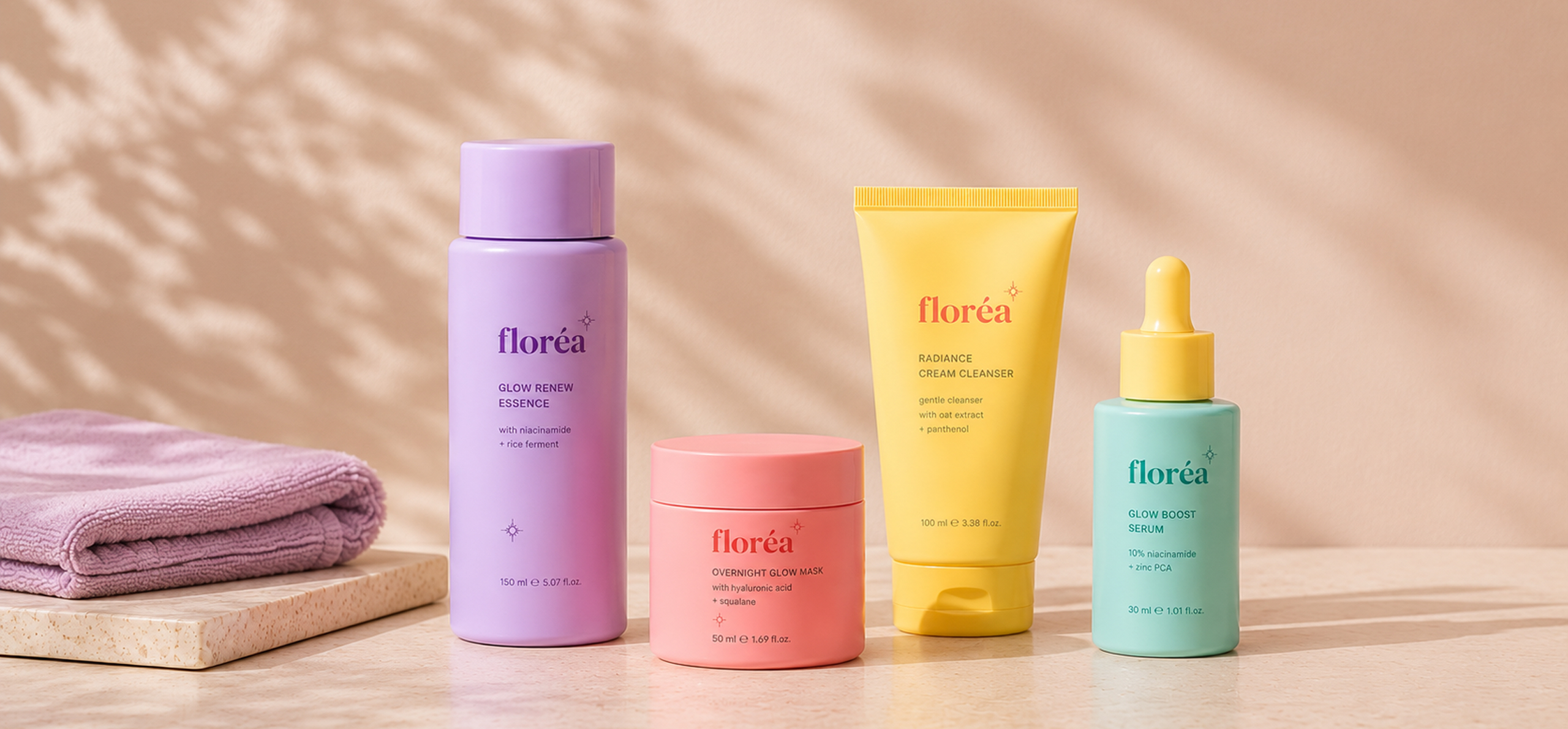
In recent years, the cosmetics market has seen the rise of a new generation of brands: small businesses born online, often led by founders who are also formulators or creatives, capable of building highly engaged communities around a clear identity. These are indie cosmetic brands, and today they represent one of the most dynamic segments of the global beauty industry.
Their strengths lie in agility, strong brand recognition, and a direct relationship with consumers that large corporations often struggle to replicate. Their main challenge, however, is packaging selection. Indie brands must balance limited production volumes, controlled budgets, the need for strong customization, and the ability to scale quickly when a product succeeds.
In this guide, we explore how to approach packaging decisions throughout the different stages of an emerging brand’s growth, the most common mistakes to avoid, and how to strike the right balance between flexible MOQs, visual identity, and sustainable growth.
What it means to be an indie cosmetic brand
The term indie brand refers to an independent cosmetics company that develops and markets its own products without being part of a large international group. The definition is intentionally broad, encompassing very different businesses: from a small artisanal laboratory with five products sold through its own website to a digitally native brand generating several million euros in revenue and distributed through selected perfumeries.
What these companies have in common is a less standardized approach to product development. Formulas are often created to address a specific need experienced by the founder or by a well-defined niche audience. Communication typically relies on social media, newsletters, and partnerships with creators, making packaging an integral part of the brand identity.
This creative freedom is balanced by significant industrial constraints. Indie brands rarely have the resources to meet the minimum order quantities required by large-scale production, invest in custom moulds, or support decoration processes that require thousands of units to offset setup costs. As a result, they need suppliers capable of providing stock packaging solutions, flexible quantities, and targeted customization focused on decoration and finishing rather than container shape.
The four growth stages of an emerging brand
Every indie brand goes through four distinct phases, although the timing and pace may vary. Each stage brings specific packaging requirements that should be carefully considered.
Pre-Launch: prototyping and validation
At this stage, the objective is to determine whether the market responds positively to the product. Quantities are extremely limited, often just a few dozen units intended for internal testing, focus groups, samples for beauty editors, or crowdfunding campaigns. The packaging should closely resemble the final product while keeping initial investment to a minimum. The most practical solution is usually to select bottles and jars from an existing catalogue in standard colors such as clear, white, or black, combined with high-quality adhesive labels. The prototype should communicate the brand concept without requiring dedicated moulds or industrial decoration processes. More sophisticated finishes such as lacquering or screen printing can be introduced later, once the business model has been validated.
First production run: small batch manufacturing and market testing
Once the product reaches the market, volumes increase from a few dozen units to several thousand. This is typically the first time the brand encounters minimum order quantity considerations. Working with suppliers offering MOQs between 500 and 2,000 units allows production to align with actual demand without tying up capital in excess inventory. At this stage, it may be worthwhile to introduce simple but distinctive decoration elements, such as single-color screen printing or bottle coloration using masterbatch. These enhancements do not require new moulds and provide a stronger visual identity than labels alone.
Scale-up: expanding beyond the niche
If the product gains traction, the brand begins selling through additional channels such as perfumeries, concept stores, specialized e-commerce platforms, and potentially selective retail distribution. As volumes grow, so do buyer expectations regarding packaging quality and supply reliability. At this point, it becomes essential to work with a supplier capable of ensuring continuity: consistent product references available through stock service, predictable lead times, and the ability to support recurring orders without significant variations in color, weight, or finish. This is also the stage where brands often enhance the user experience with additional components such as pumps, dispensers, droppers, or premium closures.
Maturity: standard catalogue or custom packaging?
Once a brand reaches stable volumes, it faces an important strategic decision: continue using standard packaging with enhanced decoration or invest in proprietary moulds and fully customized designs. The answer depends on several factors, including product margins, expected product lifecycle, and the level of differentiation required within the target channel. Many mature indie brands continue using standard packaging for most of their portfolio while reserving custom moulds for flagship products or high-value limited editions. This approach helps protect margins while maintaining strong brand recognition where it matters most.
Flexible MOQs and customization: finding the right balance
The key challenge for any independent cosmetic line is balancing production volume with the desired level of packaging customization. The lower the production volume, the harder it becomes to justify the fixed costs associated with complex decoration or custom moulds. Conversely, the more distinctive the packaging needs to be, the more production volume is required to amortize the investment.
One of the most common mistakes is trying to customize everything from the very beginning. New brands often envision their product in its final, fully developed version, inspired by established competitors. The result can be requests for proprietary moulds or decoration runs that exceed realistic sales projections, leading to capital being locked into inventory or, worse, delaying the launch altogether.
A more effective strategy is to separate structural elements from aesthetic ones and apply the same principle to packaging. Bottles, pumps, and closures can be selected from a well-designed standard catalogue. Customization can then focus on decoration – screen printing, lacquering, labeling – and high-impact visual details such as cap colors, soft-touch finishes, or decorative bands. This approach allows brands to maintain a strong identity without incurring disproportionate industrial costs.
The same logic applies to modular design. Building a product range around a common packaging platform while varying decoration and accessories makes it easier to launch new products, seasonal editions, or capsule collections without multiplying SKUs or generating waste. For a deeper exploration of this topic, see our dedicated article on packaging for small production batches.
Common packaging mistakes made by indie brands
Understanding the most frequent mistakes can help avoid launch delays and unexpected costs.
The first is choosing a supplier based solely on unit price. An apparently attractive cost per piece may conceal inaccessible MOQs, long lead times, or limited flexibility regarding colors and decoration. For indie brands, these factors are often more important than the price itself.
The second mistake is underestimating compatibility testing between the formula and the packaging. Natural formulations or products with high concentrations of active ingredients can interact with plastics, internal coatings, seals, or other packaging components. Discovering compatibility issues after launch can result in customer complaints, product recalls, and reputational damage. We discuss this topic in greater detail in our guide to cosmetic packaging quality control.
A third common error is neglecting secondary packaging. Cartons, sleeves, and shipping materials play a significant role in shaping the customer’s first impression, especially when the unboxing experience is part of the brand positioning. Overlooking these elements can undermine the effort invested in primary packaging.
Another less obvious but equally costly mistake is selecting non-standard formats. When a brand adopts an unconventional bottle shape or neck finish, every subsequent step – from filling and labeling to distribution and refilling – can become more complex and expensive. Maintaining dimensions and neck finishes aligned with industry standards simplifies the entire supply chain, even if the packaging appears less original at first glance.
Finally, many brands underestimate the importance of supply continuity. If a supplier cannot guarantee the availability of the same product references over time, subsequent production runs may differ slightly from earlier ones, negatively affecting shelf recognition and perceived quality.
Contract manufacturing vs. in-house production: what changes for packaging?
Most indie brands choose to outsource cosmetic production to a contract manufacturer while keeping branding, marketing, and sales activities in-house. This model reduces initial investment requirements and allows brands to focus on customer experience.
In this scenario, packaging follows a three-party workflow. The brand selects containers and components, often directly from a specialized packaging supplier’s catalog. The contract manufacturer handles filling, assembly, and labeling according to agreed specifications. The packaging supplier ensures stock availability and batch consistency over time. For this system to work efficiently, all three parties should align from the outset on production tolerances, delivery schedules, and formula-container compatibility requirements.
As the brand grows, organizational and production models may evolve. Some companies continue working with contract manufacturers indefinitely, while others gradually develop internal production capabilities. In these situations, the relationship with the packaging supplier often becomes more technical and collaborative. Access to comprehensive technical data sheets, updated documentation, and application support facilitates coordination across the supply chain and contributes to more efficient operations.
In both cases, the guiding principle remains the same: the smaller the brand, the greater the advantage of relying on a carefully curated standard packaging catalog. As the business grows, investing in dedicated components becomes increasingly viable without compromising economic sustainability.
How Eurovetrocap supports indie brands
For more than forty years, we have been supplying glass, plastic, and aluminum packaging solutions for the cosmetics industry, working with both global corporations and emerging brands. For indie brands entering the market, we provide several advantages that directly impact project feasibility.
Our extensive standard catalogue covers all major cosmetic categories, including fragrance, skincare, makeup, home fragrance, travel-size products, and pharmaceutical packaging. Having a wide range of ready-to-ship solutions available means brands can launch within weeks rather than waiting for new moulds to be developed.
Our customization services allow brands to enhance standard packaging through techniques such as screen printing, hot stamping, coating, and metallization. This is one of the most effective ways to create a distinctive product identity without increasing the structural cost of the container itself.
On the sustainability front, our in-house Zero In•Pack laboratory develops cosmetic packaging solutions with reduced environmental impact—an increasingly important consideration for indie beauty consumers. Recycled materials, lightweight glass, and refill systems help brands build a positioning aligned with values that today’s customers recognize and reward.
Are you an emerging brand preparing your first launch, or a growing company looking to strengthen your packaging strategy? Contact us for a personalized consultation. We’ll help you identify the containers, components, and finishes best suited to your project, based on your actual volumes and your brand’s objectives.


