
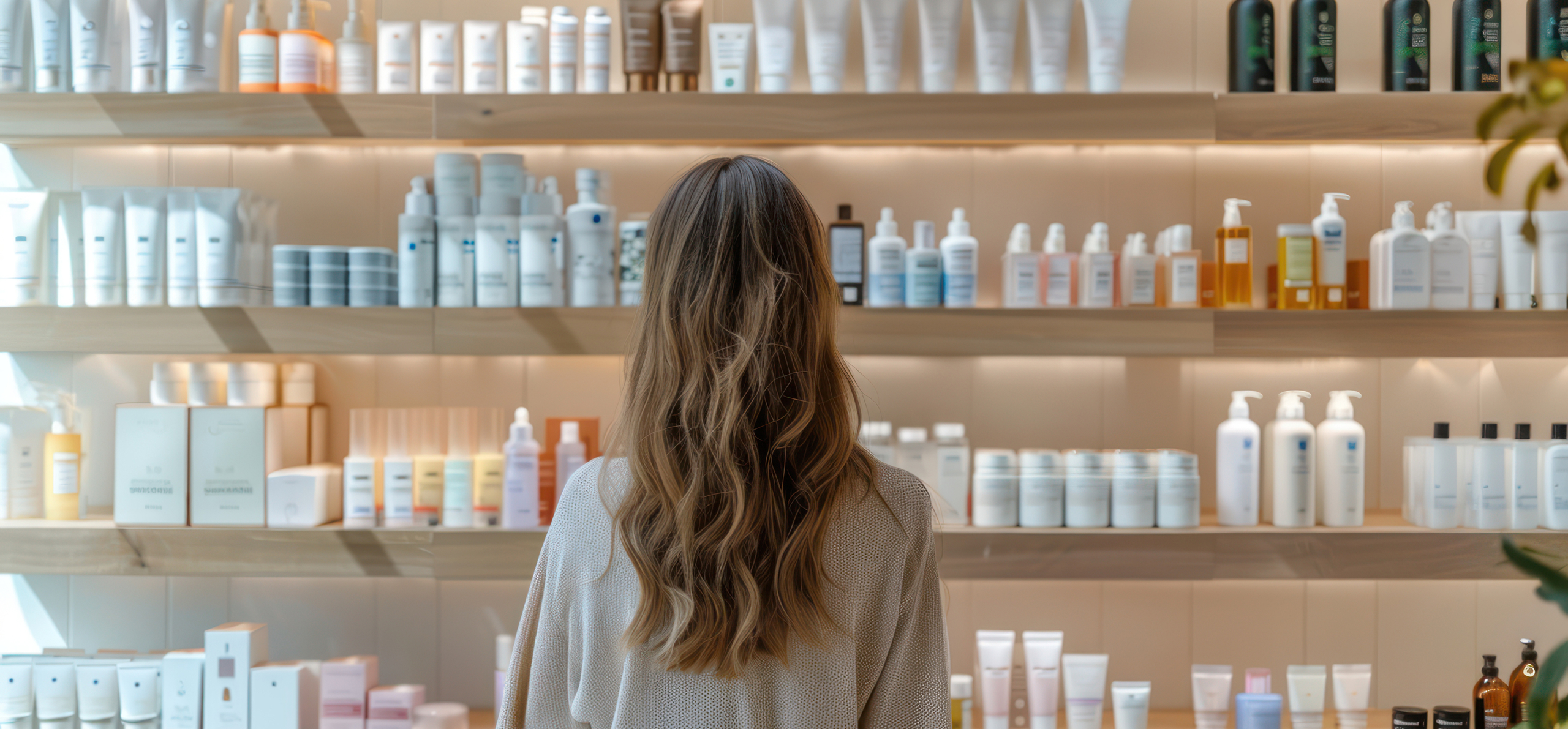
Designing packaging for physical stores can enhance the customer experience. What? When a cosmetic, perfume or beauty product arrives on a physical shelf, in addition to being a protective container, it is transformed into an authentic display tool capable of stopping the customer’s gaze, intriguing them and telling the identity of the brand in a few seconds.
In a context where every shelf is crowded with similar references, the packaging production designed for in-store use must be meticulous. In a few seconds, on the shelf, the game is played: the pack must be able, at a single glance, to convey values, quality and differentiation without the need for introductions.
In this article, we will explore the role of packaging in the point of sale, illustrating how design, material and set-up choices can improve the product customer experience and stimulate the desire to buy. We will discover the visual and sensory levers that help to emerge, we will analyze the value of secondary packaging and we will suggest effective solutions even with small budgets, without forgetting the importance of logistics and display practicality.
In the store, the one who stands out wins
The world of retail is characterized by limited exhibition space and intense competition. In particular, the shelves of perfumeries, boutiques and pharmacies are home to dozens, if not hundreds, of products that compete for the attention of the consumer’s eyes. In this framework, store packaging must meet two fundamental requirements:
- Be immediately recognizable: a pack must quickly communicate which product category it contains (cosmetics, perfume, skincare) and what values differentiate the brand. Its shape, colours and finishes must allow the customer to identify the right reference at a glance, even in the midst of a multitude of alternatives;
- Reflect the target and brand identity: each brand has a specific positioning – from luxury to sustainability, from high-tech to natural. Packaging must be consistent with these values, using appropriate visual language and materials that reinforce the message. A pack that is too generic risks getting confused in the assortment, while one that is too “flashy” without consistency can convey doubts about quality.
In short, in a competitive context, the role of packaging in the store is of the forefront: if a product manages to capture the attention of customers and quickly and intuitively convey the promise of value, the probability of testing and buying it increases considerably.
Effective packaging for in-store use
To design packaging designed specifically for in-store use, it is necessary to consider four macro-areas of intervention: shape and silhouette, colors with a high visual impact, tactile finishes and decorations, cap and accessories. Each of these components contributes to building a storytelling that turns into an experience capable of engaging the consumer.
1. Distinctive shape and silhouette
The shape of the pack must emerge with original shapes – sculpted lines, slender geometries or small asymmetrical details – in order to capture attention on the shelf without compromising stability and ease of display.
2. High visual impact colors
Colour is a key tool to make a product stand out on the shelves: the use of sharp contrasts or bright shades, even just on an element such as the cap or a band, can interrupt the visual reading and capture attention. Whether you choose metallic combinations, pop tones or targeted chromatic touches, each selection must consistently reflect the positioning of the brand and the specific function of the product, avoiding flashy choices that are incongruous with the overall identity of the line.
3. Touch finishes and decorations
The tactile finishes and decorations make the pack irresistible: silk-screen printed reliefs, soft-touch surfaces, glossy-matt contrasts and metallic foil details attract the touch and increase the perception of quality. This type of processing invites the customer to take the product in hand, creating a sensory experience that favors the purchase.
4. Cap and accessories
The cap and the accessories that complete the packaging also play a key role in creating a memorable first impact: a cap with a particular shape or made of fine materials such as satin metal, lacquered wood or customized resin can transform the product into a showcase piece, even when closed. Similarly, a decorative ring around the neck of the bottle, made of metal or plastic with a glossy or matte finish, adds a distinctive touch, bearing logos, graphic motifs or a corporate payoff.
For example, in the make-up sector, magnetic closures or defined click mechanisms are not only functional, but also become sensory elements: the strong sound and the feeling of robustness reinforce the perception of quality and attention to detail, helping to create that “surprise factor” that entices the customer to discover and buy the product.
Packaging needs to stand out and grab attention
When is secondary packaging needed?
Secondary packaging, such as a sleek cardboard box, not only serves to protect the primary pack from scratches or fingerprints in stores where products are often handled: it also provides additional space to tell the story of the product, list key ingredients, or explain the method of use, without weighing down the main container. In addition, packaging with special finishes – such as soft-touch painting, hot stamping or highlighted reliefs – can give an immediate feeling of luxury and make the product a desirable object, also perfect as a gift idea.
While secondary packaging can add protection and a luxurious look, there are cases where it’s preferable to forego it. If the products are displayed and tested directly on the shelf, a box can hinder the test and be superfluous; in small display spaces, the additional footprint risks penalizing the visibility and handling of the products; finally, when the budget is limited, investing in a well-kept and distinctive primary pack proves to be more advantageous, avoiding excessive logistical costs and practical complications.
Packaging: solutions with limited budget
Even with limited resources, it is possible to create impactful packaging at the point of sale. One strategy is to choose standard bottles with quality decorations: single-color labels, screen printing or minimal embossing can transform a simple container into a distinctive element. For seasonal or promotional occasions, personalised sleeves made of cardboard or recycled paper are ideal for emphasising limited offers and collections, without excessively affecting costs. Another solution is the use of transparent labels with metallic foil details, which enhance the primary pack while keeping its shape visible. Finally, mounting special caps on neutral packs guarantees a point of attention without upsetting the entire project, offering a balance between aesthetic quality and cost control.
Logistics and exhibition practicality
Scenographic packaging must also be functional in the retail environment. Stackability and stability are essential: containers with a wide base or scratch-resistant inserts on the bottom reduce the risk of accidental falls, while light-resistant and rubbing-resistant materials keep the graphics intact. It is important to calibrate the height and depth of the packs to adapt to standard displays, avoiding excessive bulk. The “Instagrammable” design must coexist with robustness criteria: a pack that is too unstable involves additional costs for replacements and restocking. During production, it is useful to carry out mock-ups and shelving tests to verify the resistance and visual effect in real conditions.
Need a pack that stands out in the store? Write to us: we design impactful solutions for display and sale, even on small batches. Our Eurovetrocap team is available to advise and support you in the production of tailor-made packaging.


