
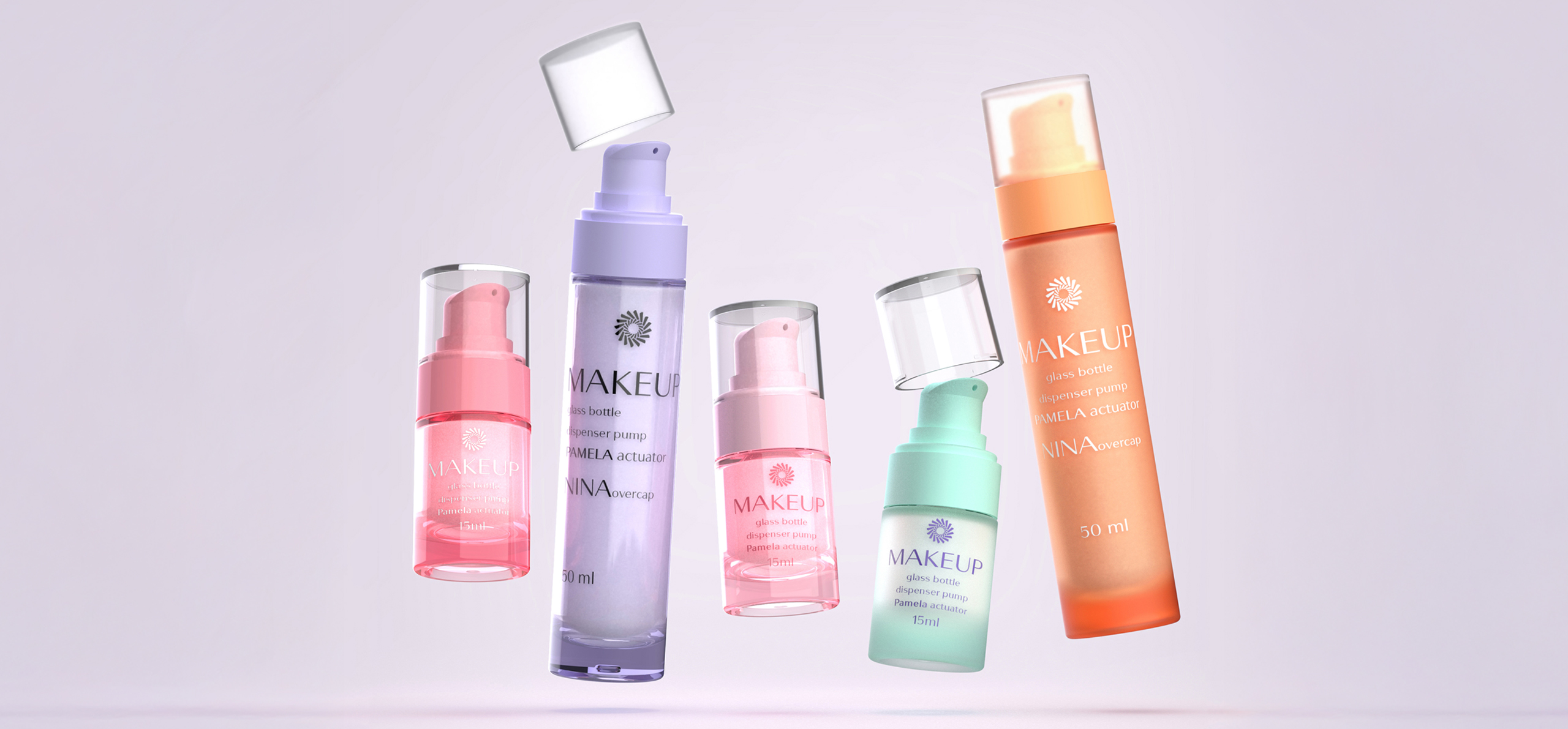
When launching a new brand in the cosmetics industry, one of the first conundrums is finding packaging that combines operational simplicity and a solid foundation for the future. Inadequate packaging risks holding back expansion, increasing costs and weakening brand perception. That’s why more and more emerging companies are choosing modular packaging-a flexible system that allows them to start with just a few pieces and expand the range without revolutionizing designs, molds or supplies.
In the article, we will look at what makes a packaging system modular, what benefits it offers to those starting from scratch (or nearly so), and how to design it intelligently and sustainably.
What is modular packaging
We talk about modular packaging when bottles, jars, dispensers, caps, and accessories are designed to be compatible with each other: they share the same attachment geometries, proportions, or materials, so they can be combined on multiple references without losing visual consistency.
Some practical examples:
- A single bottle base available in 30 ml, 50 ml and 100 ml: change the volume, not the shape.
- One cap or pump for the entire line, perhaps declined in different finishes or colors.
- Standardized decorations (silkscreens, labels, sleeves) that are easily adapted to various formats.
- Different primary packaging (e.g., bottle + jar) but aligned by common details – same colors, fonts, materials.
The result is a “toolbox” of interchangeable components that simplifies design, purchasing, production and logistics.
The five key benefits of a modular approach
1. Smooth scalability
A brand at launch often starts with one or two references to test the market. With modular packaging, one can start small and gradually add new products (or new formats) without redesigning everything from scratch. The line maintains its look & feel and grows evenly, conveying solidity to the consumer.
2. Cost optimization.
Reducing the number of molds and part numbers means buying larger volumes of the same components; hence lower unit prices, less scrap and less administrative complexity. The warehouse also thanks: fewer SKUs means in fact less capital tied up in stock.
3. Shorter and more predictable lead times
If bottles, caps and accessories are already in the catalog and already compatible, production takes less time: no new tools to build, less testing, less risk of error. This is especially valuable for startups that need to react quickly to market feedback.
4. Visual consistency and brand identity
Consumers immediately perceive a uniform family feeling between face cream, serum and toner: color and formal consistency reinforces brand identity and facilitates on-shelf or online recognition. In a crowded industry like cosmetics, visual consistency is a competitive advantage.
5. Logistical efficiency and operational sustainability
Coordinated shapes and similar sizes enable standardized packaging, transport and storage: more streamlined pallets, shared secondary packaging, faster picking. Less diverse handling also means less economic and environmental impact.

Modular packaging, the choice that simplifies today and prepares for tomorrow
How to design an effective modular system
- Select recurring formats
- Skincare? 30 ml, 50 ml and 100 ml cover the majority of needs.
- Serums and essences? 15 ml and 30 ml are the sweet spots.
- Scents? 50 ml for the core, 100 ml for the premium reference.
- Uniform closures
A 24/410 screw cap or 18/415 pump, if available in multiple finishes (glossy, soft-touch, metallic), becomes the signature of the range-you’ll use it on every bottle without changing the fill line.
- Coordinate decoration
Define a modular graphic cage: logo and claim always in the same position, differentiated color scheme per single reference, regulatory information in a fixed block. This way an Adobe Illustrator file can be duplicated and edited in a flash.
- Plan already with expansion in mind
Even if you don’t have a 200 ml cleanser on your roadmap today, consider from the beginning a larger size compatible with the same pump or cap. Prevention is better than re-printing.
- Compare with packaging partner
Eurovetrocap, with an extensive library of compatible containers and closures, can suggest ready-made component clusters that reduce upfront costs and procurement risks.
Modular packaging & sustainability: a smart combination
The modular nature of packaging dovetails naturally with sustainability goals: reducing the number of variants limits the amount of waste to be disposed of, while the use of standardized components facilitates refill and reuse programs. Moreover, when materials are homogeneous-for example, the same polymer for bottle and cap-the end-of-life recycling path becomes more linear and efficient. In other words, choosing a modular system means simplifying not only the supply chain but also the overall environmental impact of the product.
How Eurovetrocap supports your growth
Eurovetrocap accompanies cosmetic brands at every stage, offering a library of bottles, jars and closures that are already compatible with each other, allowing you to start with small batches and expand without changing molds or filling lines. The dedicated team offers technical and creative advice, working alongside you in choosing formats, defining decorations and optimizing the entire supply chain. With this expertise, you can build a flexible and scalable packaging structure that can support the evolution of your business while meeting budget and sustainability goals.
Need flexible, beautiful and efficient packaging? Contact us: together we will design a modular system ready to grow with your brand.


