
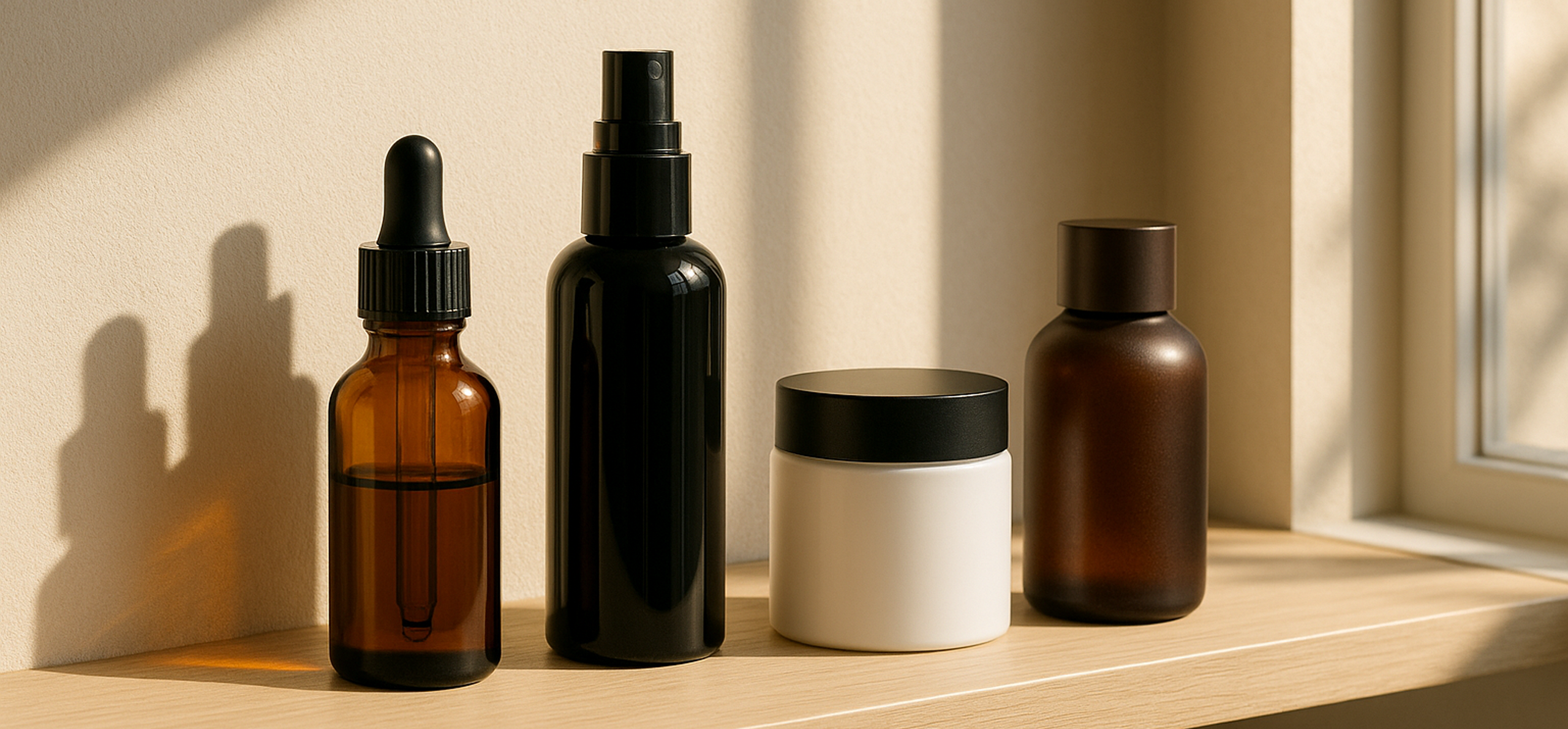
When an active ingredient – whether it’s vitamin C in a face serum, essential oils, botanical extracts or beta-carotene in a supplement – is exposed to UV radiation and high-energy visible light (HEV), it begins a photooxidation process that can degrade up to 80% of its effectiveness in just a few weeks. There are some cosmetic ingredients, which are more photosensitive than others and, in these cases, the free radicals produced disrupt molecular chains, alter color, aroma and texture, generate offflavor and can affect the reputation of the brand in the eyes of the most performance-conscious consumers.
The choice of primary packaging, in addition to aesthetics, represents a functional barrier designed to modulate light penetration and oxygen supply, keeping the internal chemical and physical conditions constant. In the following paragraphs, we analyze the available solutions – from amber glass to high-barrier polymers, from UV coatings to opaque decorations – evaluating their optical properties, mechanical resistance and cross-industry applications.
Light and oxidation: parameters to monitor
The most frequent effects of light exposure are:
- oxidation of active ingredients
- the onset of rancid scents, chromatic variations and consistency
- the decrease in the effectiveness declared on the label.
Not all light, however, is the same. The ultraviolet component (UVC 100280 nm, UVB 280315 nm, UVA 315400 nm) has enough energy to break chemical bonds, triggering radical chains that degrade sensitive pigments, antioxidants and unsaturated oils. The HEV band, the so-called “blue light” (400500 nm), can also cause photodegradation of carotenoids and natural fragrances, with color change and aromatic loss.
To assess whether packaging provides adequate protection, three key KPIs are monitored:
- UV transmittance (%): share of radiation that passes the wall of the container. The lower it is, the greater the defense;
- OTR – Oxygen Transmission Rate: measures the oxygen permeation (cc/m²·24 h) that accelerates oxidative reactions;
- TDS – Total Dose Standard: total amount of absorbed radiation compatible with the target shelf life.
Once these parameters have been fixed, it becomes easier to compare glass, additive polymers or coatings and choose the combination that best suits the sensitive profile of the formula.
Packaging is a true functional barrier: it limits light and oxygen, stabilizes the formula and extends its lifespan
Solutions to protect the formula
Dark glass: the most common natural barrier
Amber glass reduces UVB transmittance by up to 10% and offers excellent chemical inertness for skincare and facial care products. An alternative frequently used in botanical perfumery is green glass with chromium oxide, a natural, sustainable and elegant solution.
Disadvantages: high weight and fragility under impact, especially in travel formats. Where logistics require lightness, barrier polymers come into play.
High-barrier polymers and anti-UV additives
When you need lightweight, shatterproof bottles, polymers become the natural alternative to glass. Basically, however, PET, PP or PE allow most of the UV rays to pass through. To transform them into luminous “shields”, small quantities of UV filters are mixed upstream: they are masterbatches that incorporate minerals such as zinc oxide or special organic molecules like those used in sunscreens. The wall of the bottle remains thin and light but becomes much less transparent to light.
If the product is particularly delicate – think of an oil rich in omega-3 or a very unstable natural extract – you can go a step further and build the container “in layers”: inside a polymer compatible with the formula, in the center an EVOH film that blocks both oxygen and UV, on the outside the aesthetic material chosen by the brand. The result is a robust pack, with excellent barrier performance and, above all, fully recyclable because the layers bind without glue.
Painting with anti-UV filters
For those who want the transparency of flint glass without sacrificing shielding, there are solgel paints and organic lacquers enriched with ceramic micro-filters: they are applied to the already formed bottle, their weight or size do not change and can be declined in satin, glossy or soft touch finishes. When in contact with light, these coatings reflect or absorb UV rays, extending the life of the product without altering the original design.
Opaque decorations
A full screen printing, generous hot stamping or vacuum metallization not only serve to impress the consumer’s eye: they create a covering film that prevents light from penetrating. In this way, protection and storytelling go hand in hand: the brand gets a premium look, and the formula stays stable for longer.
Smart secondary packaging
RPET sleeves, FSC boxes or boxes with black interiors are valuable allies along the supply chain: they protect the product during transport, reduce exposure to light at the point of sale and offer additional space for sustainability messages or instructions for use. Some skincare brands, for example, offer cases that the consumer can keep and reuse as a case, thus extending the protective function to the home.
Protection and style
The fear that a protective packaging must be opaque and anonymous is now overcome. Today, the barrier to light becomes part of the brand’s aesthetic language: amber glass recalls ancient botany laboratories and goes perfectly with cream labels and gold details, while soft-touch lacquers in nude or taupe shades invite contact and immediately convey feelings of premium care. Those looking for a more contemporary look can opt for gunmetal metallizations or satin copper, mirrored surfaces that reflect ambient light but prevent harmful light from filtering through. A full-body screen print in milky white or a tone-on-tone botanical pattern also act as a screen, blending function and storytelling. In short, protecting the formula does not mean covering up: it means dressing it in a garment that defends it and, at the same time, tells its soul.
Eurovetrocap protects your formulas
Choosing the wrong packaging for a photosensitive product means losing effectiveness, reputation and turnover. With Eurovetrocap you can count on amber glass bottles, plastics with anti-UV additives, shielding paints and opaque decorations. We also guarantee technical advice and tailor-made solutions that combine performance and style.
Thanks to a flexible stock service, you can launch small batches, validate the market and minimize waste and carbon footprint. When the line grows, we accompany you in the development of custom packs, with dedicated molds and tailor-made finishes.
Contact us now and let’s design together your beautiful packaging, consistent with your positioning and safe for your most precious assets.


