
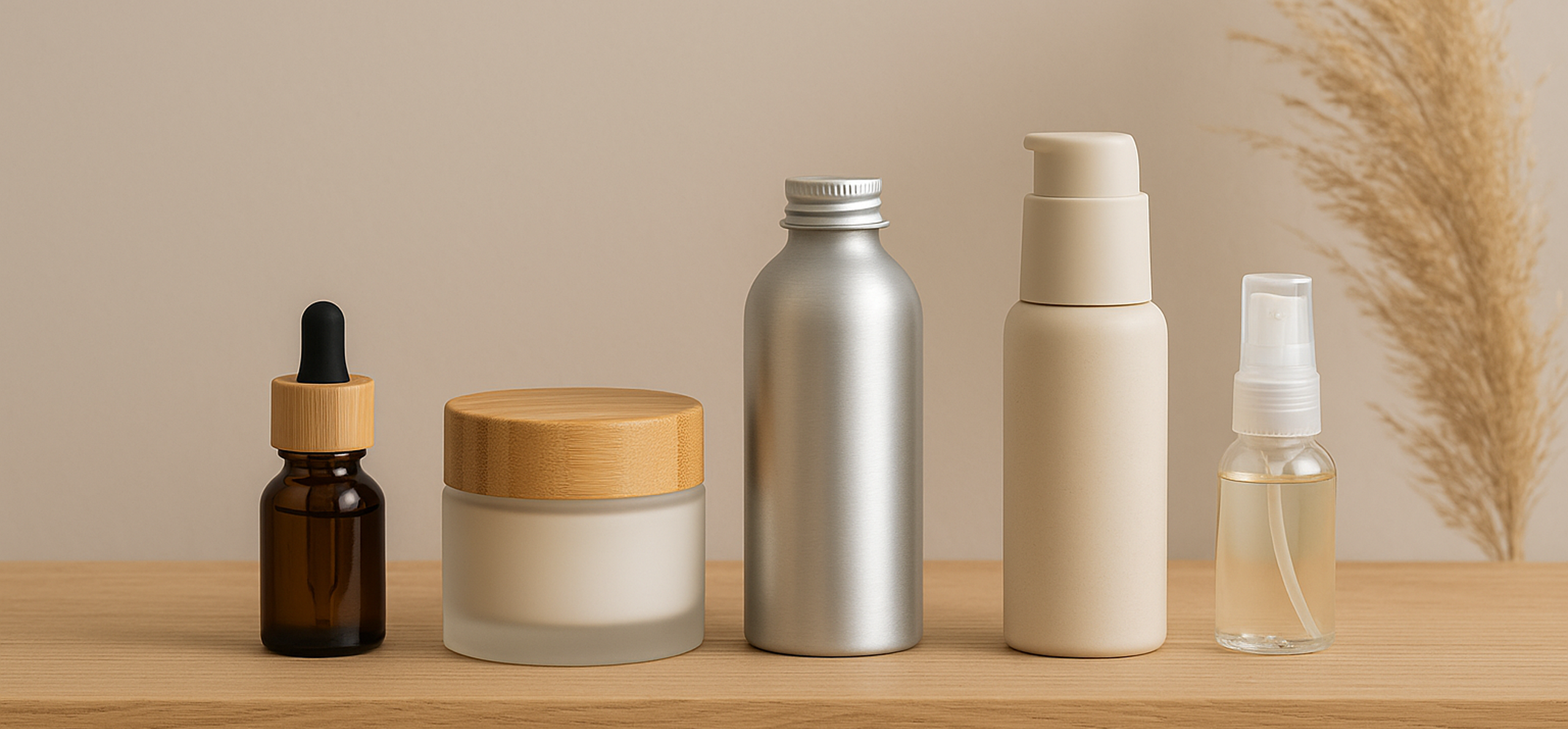
The natural cosmetics market continues to grow at a double-digit rate and with it the expectations of transparency, safety and environmental responsibility are increasing. If the formula is “clean”, the container must also be up to par: recyclable materials, processes with a reduced carbon footprint and the absence of potentially harmful substances become essential requirements. Below you will find concrete criteria to identify the most suitable eco-sustainable packaging for botanical serums, organic creams and plastic-free body care lines, while ensuring product stability and brand credibility.
Natural formulas and tailor-made packaging
Plant-derived active ingredients – floral hydrolates, citrus essential oils, extracts obtained with supercritical CO₂ and antioxidant vitamins – have more delicate molecular chains than their synthetic equivalents. The absence (or strong reduction) of traditional preservatives makes them particularly vulnerable to light, dissolved oxygen and microbial contamination, factors that rapidly trigger oxidation processes and reduce their functional effectiveness. In addition, the high concentration of terpenes and free fatty acids can corrode standard gaskets, dull polyester paints, and even alter certain adhesives.
If the container does not guarantee an adequate barrier, within a few weeks there may be color changes, rancid olfactory notes, loss of cosmetic activity and, in the most extreme cases, micro-leaks of the product. Choosing suitable materials and closures therefore means protecting the active ingredients and preserving the sensory experience that the consumer expects from natural cosmetics.
4 technical aspects to choose the pack
Before signing an order or starting production, it is advisable to check four key parameters that will determine the stability of the formula and the environmental consistency of your cosmetic.
1. Material compatibility formula
- Migration test (GCMS, ISO 17025) on glass, PET and PP to exclude release of monomers or absorption of oils;
- Sealing gaskets: TPE, NBR or silicone o-rings are more resistant to citrus fruits and terpenes;
- Decoration stability: UVLED screen printing with low migration inksremains intact in the presence of essential oils.
2. Light and air protection
- Amber/green glass: lowers UV transmittance;
- Airless system in PP or mono-material PET: reduces exposure to oxygen, ideal for paraben-free emulsions;
- Hermetic cap with PE foam liner: guarantees stability over time.
3. More sustainable decorations
- Water-based organic screen printing vs. polyurethane paints;
- UVLED digital printing: low energy, no solvent, low MOQ;
4. Consistent Communication
The packaging must “speak the same language” as the formula: colour palettes inspired by nature (sage, ochre, warm ivory), tactile surfaces reminiscent of recycled paper or petal velvet thanks to soft-touch finishes and feel paper, as well as a short but concrete copy that measurably declares the percentage of recycled plastic used and the certified CO₂ reduction along the supply chain. A clearly visible pictogram on the front pack, or a QR code that refers to an interactive LCA, transform a technical data into a gesture of transparency immediately perceived by the consumer.
Recommended materials
To make an informed choice, it is worth analyzing, one by one, the materials most used in natural cosmetics, focusing on their strengths and possible critical points.
Glass (flint, amber or green)
It is the most “classic” material: totally inert, infinitely recyclable and immediately perceived as premium. Dark variants add an almost total UV barrier, perfect for essential oils and vitamin-rich serums. On the other hand, it weighs more, requires high fusion energy and is naturally brittle.
PCR Plastic (PET or PE)
Reduces the use of virgin material and remains light and unbreakable. The optical rendering is good, although a very high percentage of PCR can give slight shades of color. In some countries, the FDA limits use above 50% for food grade applications, but in beauty the threshold is more flexible.
Mono-material PP airless
All the bottle, including pump parts, is made of polypropylene: this facilitates recycling and lowers the overall weight. The absence of metal inserts eliminates the risk of contaminants, while airless technology preserves natural paraben-free emulsions, minimizing exposure to oxygen. The aesthetics are less “luxury” than glass, but some brands have shown that a clean PP design can still communicate quality.
Aluminium95% recyclable with enormous energy savings compared to primary production, it is lightweight and a total barrier to light and oxygen. However, it requires internal painting to avoid interactions with aqueous formulas and a small plastic insert in the closure.
Bamboo + glass
Combining a bamboo cap – a fast-growing renewable material – with a glass bottle allows you to reduce the plastic share while maintaining a premium perception. However, it is necessary to advise the consumer to disassemble the two parts before being disposed of in the different recycling streams.
In summary, there is no absolute “best” material: the choice depends on the level of protection required, price positioning, logistics and the brand’s sustainability goals.
Best practices for reducing lifecycle impact
Sustainability is not only played out in the choice of material, but along the entire product path. The first step is design for recycling: focusing on mono-material structures or components that the user can separate in a few gestures. Think of a dropper that can be disassembled into a TPE bulb and glass pipette: a simple operation that facilitates correct separate disposal.
Next there is the so-called lightweighting. Lightening a 50 ml glass bottle, or reducing the thickness of a PET container by 10% without compromising its robustness (verified with FEM analysis), means cutting raw material and CO₂ already in the production phase.
Third piece: the gradual integration of PCR. It starts with 30% in the pilot lots to verify chromatic and mechanical compatibility, then rises to 50100% once the technical qualification has been obtained. Thus, post-consumer waste comes back to life in a virtuous circle.
Finally, when the viscosity and storage characteristics allow it, it is worth implementing refill & refill.
From theory to implementation with Eurovetrocap
When working with natural formulas, you need to keep three invisible enemies under control – light, oxygen and microbial contamination – without losing sight of the environmental footprint of the container. Materials such as dark recycled glass, high-post-consumer PCR plastic, mono-material airless bottles made of PP and lightweight aluminium guarantee functional barrier and CO₂ reduction, but they only really express their potential if they are included in a project that involves research & development, marketing and supply chain from the beginning.
From the first sampling to the rollout, we at Eurovetrocap support the brands by helping them transform green principles into packaging that protects the formula, communicates values and respects the environment.
Every natural formula deserves a pack that respects and tells its story. With Eurovetrocap you can combine technical barrier, circular economy and sustainable storytelling. Contact us to design together the next eco-sustainable success of your brand.


